
Mergers and acquisitions in California involve significant financial and legal risks. A thorough M&A due diligence process protects your investment by uncovering hidden liabilities, accounting irregularities, and operational weaknesses before you commit capital.
We at Pierview Law help business owners navigate this complex process by examining financial records, legal contracts, compliance issues, and asset ownership. This guide walks you through the critical areas you need to investigate.
What Numbers Tell You About a Target’s True Financial Health
Start with Historical Financial Records
Financial statements reveal whether a target’s numbers match reality. Most buyers focus on the bottom line, but the forensic work happens in the details-comparing bank deposits to revenue claims, testing expense consistency across years, and stress-testing projections against actual performance. Review three to five years of historical financials, not just the last twelve months. A company that reports steady 10% annual growth but shows volatile monthly cash deposits signals potential revenue recognition problems. Cross-check the target’s accounting records against bank statements and customer invoices. If a seller claims $500,000 in Q3 revenue but deposits only $420,000, that gap needs explanation. Sometimes it’s timing; often it’s something worse.
Spot Revenue Recognition Red Flags
Revenue recognition inconsistencies rank among the most common red flags in M&A transactions. A target might classify sales as revenue before customer payment clears, or bundle service contracts in ways that inflate current-period income. Expense reporting tells a parallel story-legitimate businesses maintain consistent cost-of-goods-sold ratios year over year. If COGS jumps from 35% of revenue to 52% without explanation, operational problems or accounting adjustments are hiding. Healthcare practices face similar pressures.
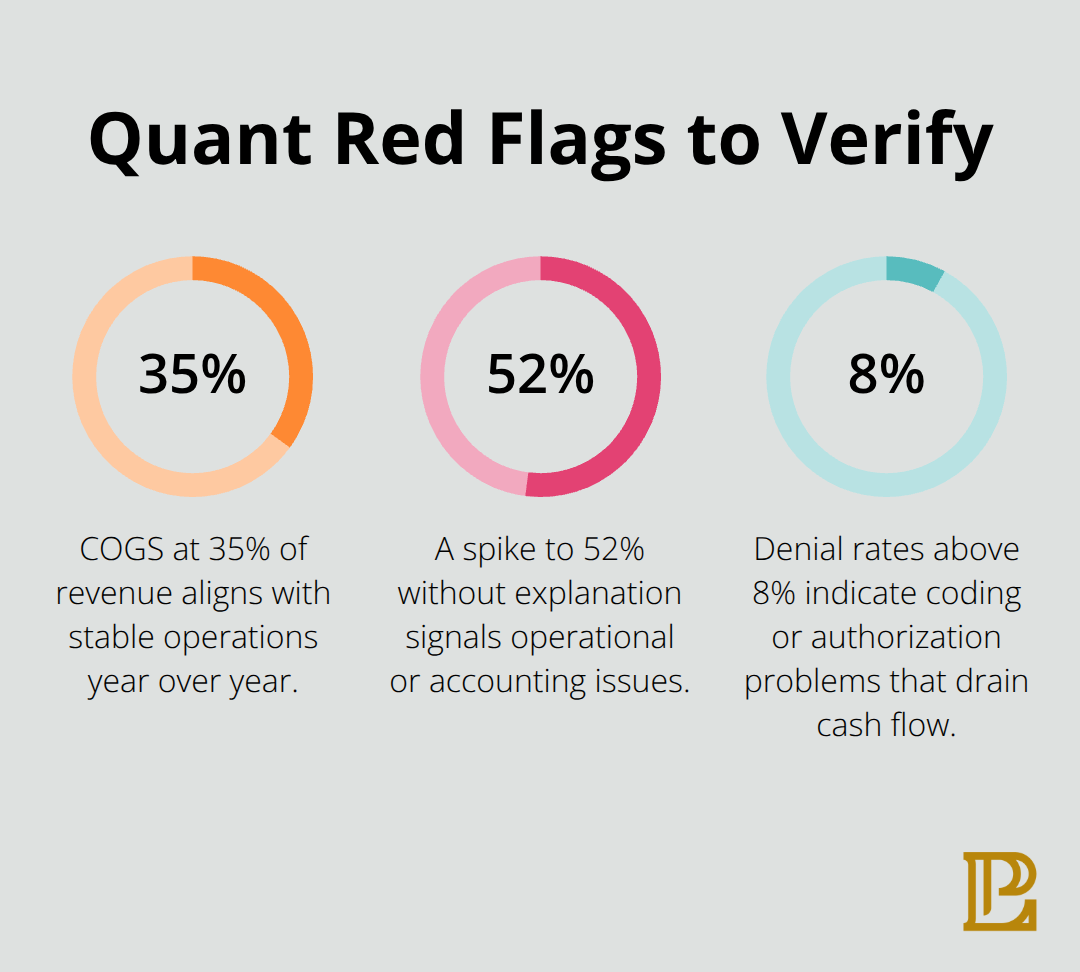
Denial rates above 8% signal coding problems or prior authorization failures that will persist post-close and drain cash flow after you acquire the practice.
Test Projections Against Reality
Forecasts demand skepticism. Many sellers project aggressive growth without supporting evidence. Compare the target’s projections to competitor benchmarks and industry trends. If the target projects 25% annual growth while the sector averages 6%, ask why. Demand detailed assumptions: which customers will drive that growth, what’s the conversion timeline, and what happens if key clients leave.
Assess Customer and Payer Concentration Risk
High customer concentration amplifies forecast risk. A business where one customer represents 40% of revenue bets its future on a single relationship. Healthcare practices face identical exposure-if 60% of billings come from three insurance plans, rate changes or contract terminations devastate cash flow. Financial projections that ignore these operational dependencies are fiction. These concentration risks directly shape what happens to your cash flow post-close, making them essential to understand before you move forward with legal and compliance reviews.
Legal Obligations That Kill Deals
Change-of-Control Clauses and Contract Termination Risk
Contracts hide the real risk in M&A transactions. Most buyers scan major customer agreements and supplier deals, then move forward. That approach costs money. Change-of-control clauses buried in vendor contracts terminate relationships the moment you close, leaving you without critical suppliers or revenue streams. A manufacturing target with three primary vendors loses all of them if those contracts require consent for ownership changes. Healthcare practices face identical exposure through payer agreements and management service organization contracts. You must review every material contract systematically: customer agreements, vendor relationships, distribution deals, equipment leases, and any document that binds the business to outside parties.
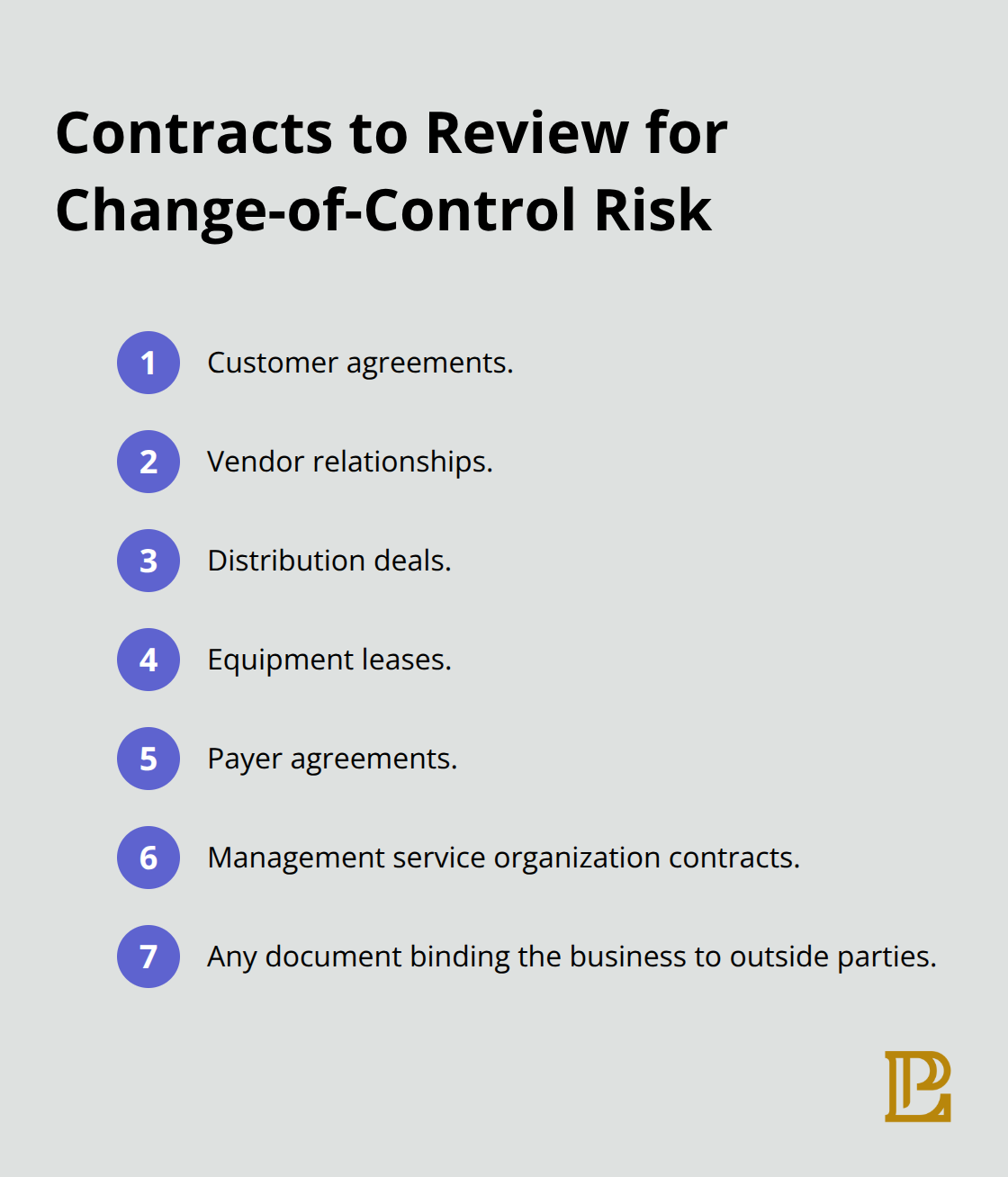
These hidden termination triggers represent cash drains that financial statements never reveal.
Regulatory Compliance and Licensing Transfer
California Senate Bill 351 codifies restrictions on lay-owned entities controlling medical practices, meaning healthcare acquisitions require structural firewalls between ownership and clinical operations. If the target’s management services organization sweeps variable percentages of revenue instead of charging fixed fees, you inherit a compliance violation that the California Medical Board will eventually challenge. Verify that licensing requirements transfer cleanly. Alcohol licenses, medical licenses, and professional permits often cannot be assumed by new owners without formal reapplication, creating operational gaps between closing and restart. California healthcare acquisitions trigger OHCA materiality thresholds at roughly $10 million in state-derived revenue or 25 percent of total state assets, requiring a 90-day pre-closing review period that extends your timeline substantially.
Litigation History and Insurance Coverage Gaps
Pending litigation and unrecorded liabilities represent cash drains you cannot see on financial statements. Request five years of litigation history, including settled cases, current disputes, and threatened claims. Insurance coverage gaps matter enormously. If a target carries standard commercial liability but lacks professional liability or product liability coverage, you assume that exposure post-close. A healthcare practice without adequate malpractice coverage leaves you vulnerable to claims that drain reserves after acquisition.
Employment Agreements and Labor Compliance
Employment agreements and labor disputes demand forensic attention equal to financial records. High turnover signals management problems or compensation misalignment that persists after acquisition. Request all employment contracts, compensation plans, retirement benefit obligations, and union agreements if applicable. California employment law imposes strict notice requirements for wage-and-hour compliance and classification disputes. A target misclassifying employees as independent contractors faces wage claims, penalty assessments, and regulatory fines that transfer to you through successor liability. Conduct background checks on key executives and managers to assess integrity and identify hidden risks. A practice manager with prior fraud convictions or a sales director with regulatory sanctions creates exposure that financial statements never reveal.
Credential Verification and Data Room Preparation
Healthcare practices must verify that physicians maintain active, unencumbered medical licenses and that clinical staff credentials align with their stated roles. Credential verification organizations provide third-party confirmation that reduces your post-close liability. Treat employment compliance as a strategic asset during due diligence, not an administrative checkbox. Robust employment documentation supports indemnities, purchase price adjustments, and risk reduction for lenders and buyers. Build your data room to include NPI registries, cap tables, and compliance discovery aligned with automated screening, allowing you to withstand scrutiny that accelerates deal timelines and prevents closing delays caused by undisclosed labor disputes or regulatory violations. These operational and asset verification steps follow naturally from your legal and compliance review, revealing whether the target’s physical infrastructure and intellectual property align with the representations made during negotiations.
Operational and Asset Verification
Physical Assets Reveal Hidden Capital Costs
Physical assets and supplier relationships determine whether a target generates cash or consumes it post-close. Equipment condition, inventory accuracy, and vendor dependencies rarely appear in financial statements with enough detail to guide acquisition decisions. Start by physically inspecting equipment and machinery. A healthcare practice’s EHR system, diagnostic equipment, and furniture represent millions in replacement costs if they fail post-close. Request maintenance records, warranty documentation, and age assessments for critical assets. Equipment purchased five years ago with no maintenance history signals deferred capital expenditure that becomes your problem immediately after closing.
Inventory Audits Must Match Records
Inventory audits must match accounting records within 2 to 5 percent. Retail or manufacturing targets with inventory discrepancies above that threshold hide either theft, obsolescence, or accounting manipulation. Conduct a full physical count concurrent with your financial review, not weeks later when inventory has shifted. Healthcare practices carry less tangible inventory but still require assessment of supply contracts, equipment leases, and facilities maintenance obligations that persist post-close.
Supplier Relationships Determine Operational Continuity
Supplier and customer relationships determine operational continuity after you acquire the business. Request the complete vendor list and review contracts with your top five to ten suppliers, not just the largest ones. Manufacturing targets often depend on specialty vendors for critical components, and losing those relationships during transition creates production delays and customer dissatisfaction. Verify that supplier agreements do not contain change-of-control termination clauses that sever relationships the moment closing occurs.
Customer concentration risk demands equal attention. Identify which customers generate 80 percent of revenue and assess their contract terms, renewal dates, and likelihood of departure post-close. Healthcare practices should map which insurance plans represent the largest revenue percentages and review those payer agreements for rate-change provisions or termination triggers tied to ownership transitions. Request customer turnover data for the past three years and ask why customers leave.
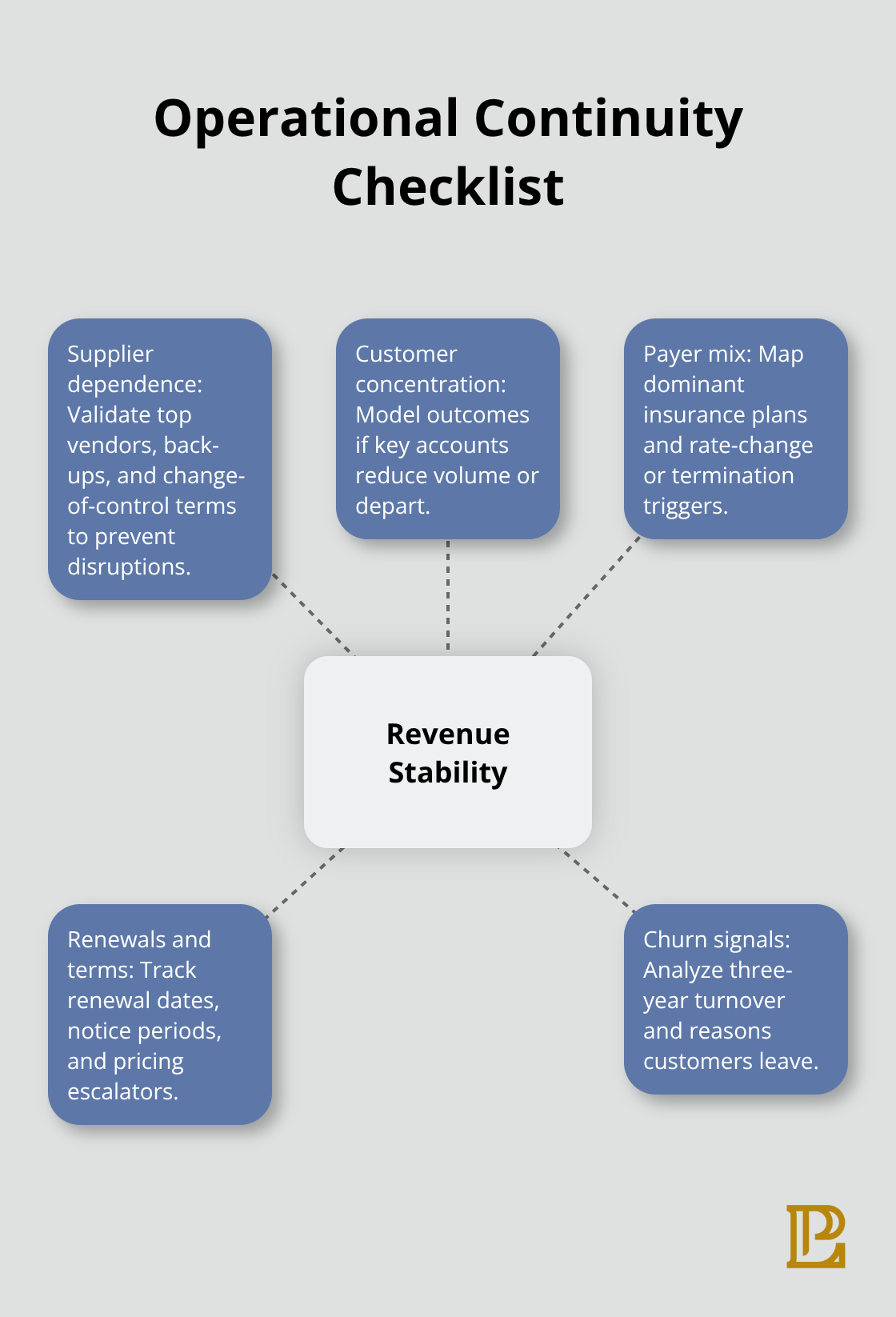
High churn rates signal product quality issues, service failures, or pricing misalignment that financial projections ignore.
Intellectual Property Ownership Requires Forensic Verification
Intellectual property ownership requires forensic verification beyond simple representations. Patents, trademarks, software code, and trade secrets must be owned outright by the target, not licensed from third parties or developed by contractors who retain rights. Review patent registrations through the US Patent Office database and trademark registrations through the USPTO TESS system to confirm ownership and identify any encumbrances. Software targets demand source code ownership verification and review of all open-source licenses that might restrict your ability to modify or commercialize the product post-close.
Healthcare practices carry intellectual property in clinical protocols, patient intake forms, and billing workflows developed over years of operation. Verify that these assets belong to the practice, not to departed physicians or former consultants who retain rights. Title searches and brand protection documentation must precede closing to avoid post-acquisition disputes over asset control (and the legal costs that follow from unclear ownership chains).
Final Thoughts
M&A due diligence in California demands systematic investigation across financial, legal, and operational domains. The process protects your capital by exposing hidden liabilities, accounting irregularities, and operational weaknesses before you commit to acquisition. Financial forensics reveal whether revenue recognition matches reality and whether projections rest on solid assumptions or wishful thinking.
Legal review uncovers change-of-control clauses that terminate critical relationships, regulatory compliance gaps that create post-close liability, and employment disputes that drain cash flow after closing. Operational verification confirms that physical assets, supplier relationships, and intellectual property ownership align with seller representations. Common pitfalls emerge when you skip steps or compress timelines-reviewing only the last twelve months of financials misses patterns that three to five years of history reveal, and scanning major contracts without systematic review leaves hidden termination triggers undiscovered.
Professional legal guidance transforms M&A due diligence in California from a compliance exercise into a strategic asset that shapes deal structure, purchase price, and post-close success. We at Pierview Law guide business owners through M&A transactions by examining financial records, legal contracts, compliance obligations, and asset ownership with the forensic rigor that protects your investment. Contact us for sophisticated legal support tailored to your acquisition goals and risk tolerance.