
Corporate contracts form the backbone of business operations in Hermosa Beach and beyond. A single poorly drafted clause can expose your company to significant financial risk or legal disputes.
At Pierview Law, we’ve seen countless business owners struggle with contract issues that could have been prevented with proper planning and review. This guide walks you through the common mistakes to avoid and the protections your business needs.
Mistakes That Turn Contracts Into Liabilities
Vague Language Creates Costly Disputes
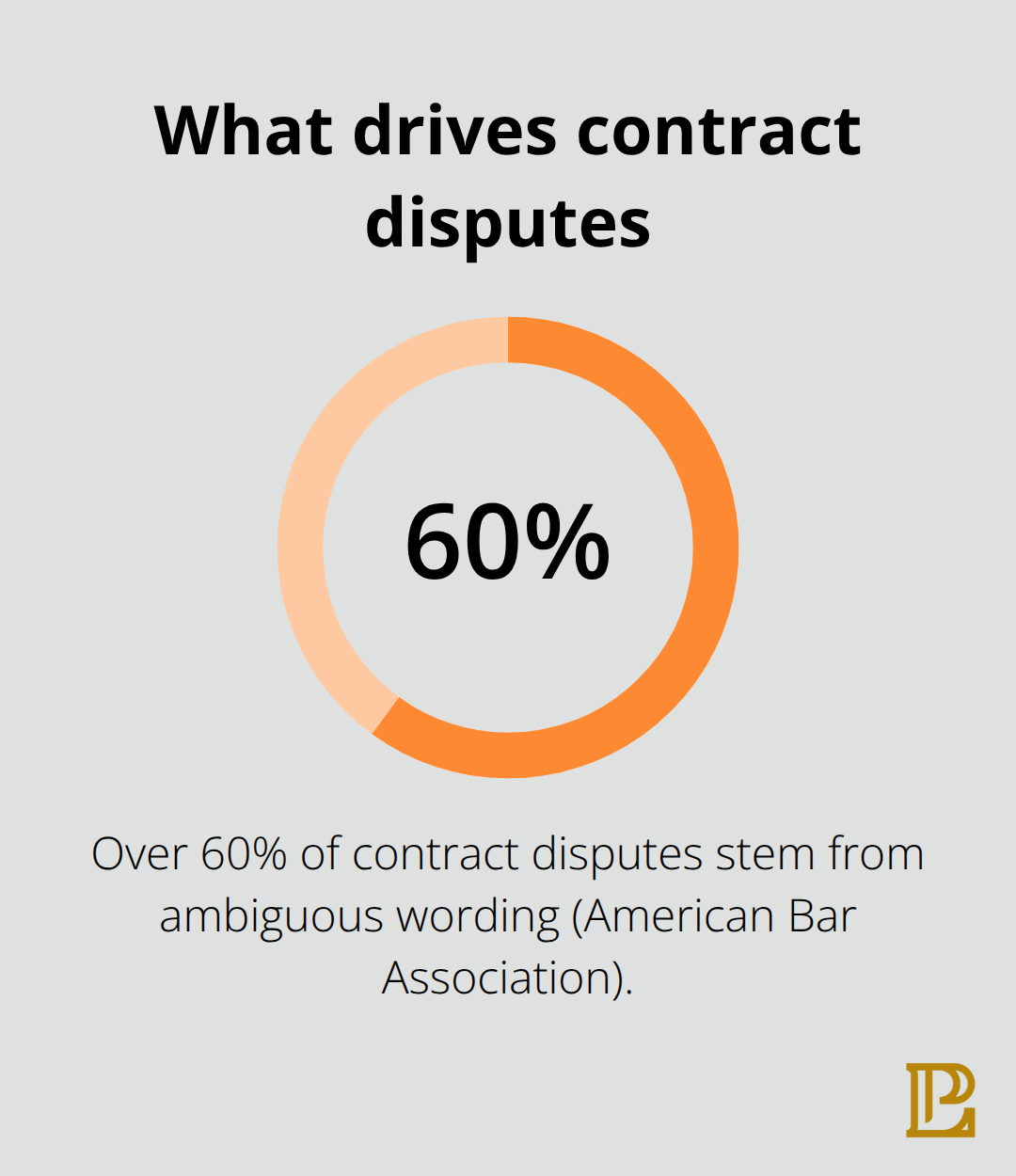
Vague contract language costs businesses real money. When terms like reasonable effort, best efforts, or timely delivery appear without clear definitions, disputes become inevitable. The American Bar Association found that over 60% of contract disputes stem from ambiguous wording rather than disagreements about core business terms. In Hermosa Beach and Los Angeles County, this pattern repeats constantly.
One local manufacturing company lost $180,000 in a payment dispute because their service contract failed to define what constituted acceptable performance. The opposing party claimed their work met the vague standard of satisfactory quality, while the manufacturer disagreed entirely. The contract said nothing about inspection procedures, acceptance timelines, or remedies for substandard work.
Specificity prevents costly disputes. Instead of writing that a vendor must provide quality materials, state exactly what quality means: ISO certifications, third-party testing results, or specific performance metrics. Instead of saying payment is due promptly, specify the exact date, the payment method, and what triggers the obligation. This level of detail stops the back-and-forth that derails projects and relationships.
Missing Protections Leave You Exposed
Missing protections in corporate contracts create exposure that business owners don’t anticipate until problems arise. Many Hermosa Beach companies operate without clear dispute resolution mechanisms, leaving them vulnerable to expensive litigation as the only option. Including a mediation or arbitration clause can reduce resolution costs by 40% to 60% compared to court proceedings, according to the American Arbitration Association.
Indemnification language clarifies who bears financial responsibility when things go wrong. A contractor working without indemnity protection faces personal liability if the client gets sued, even when the contractor wasn’t at fault. California contract law requires written agreements for real estate transactions, contracts exceeding one year, and sales over $500, as outlined in California Civil Code Section 1624. Beyond these statutory requirements, your contract needs liability caps that reflect realistic risk allocation, clear definitions of confidential information if trade secrets are involved, and termination provisions that specify how either party can exit the agreement.
Building Protections Into Every Contract
Strong contracts address risk allocation from the start, not after a dispute emerges. The protections you need depend on your specific transaction and relationship. A vendor agreement requires different safeguards than a real estate lease or an employment contract.
The common thread across all contracts is clarity about obligations, consequences for breach, and pathways to resolve disagreements without litigation. When you structure these elements properly, you shift from reactive problem-solving to proactive risk management.
The next section covers the essential elements that transform a basic agreement into a contract that actually protects your business interests.
What Makes a Contract Actually Protect Your Business
Define Your Scope With Precision
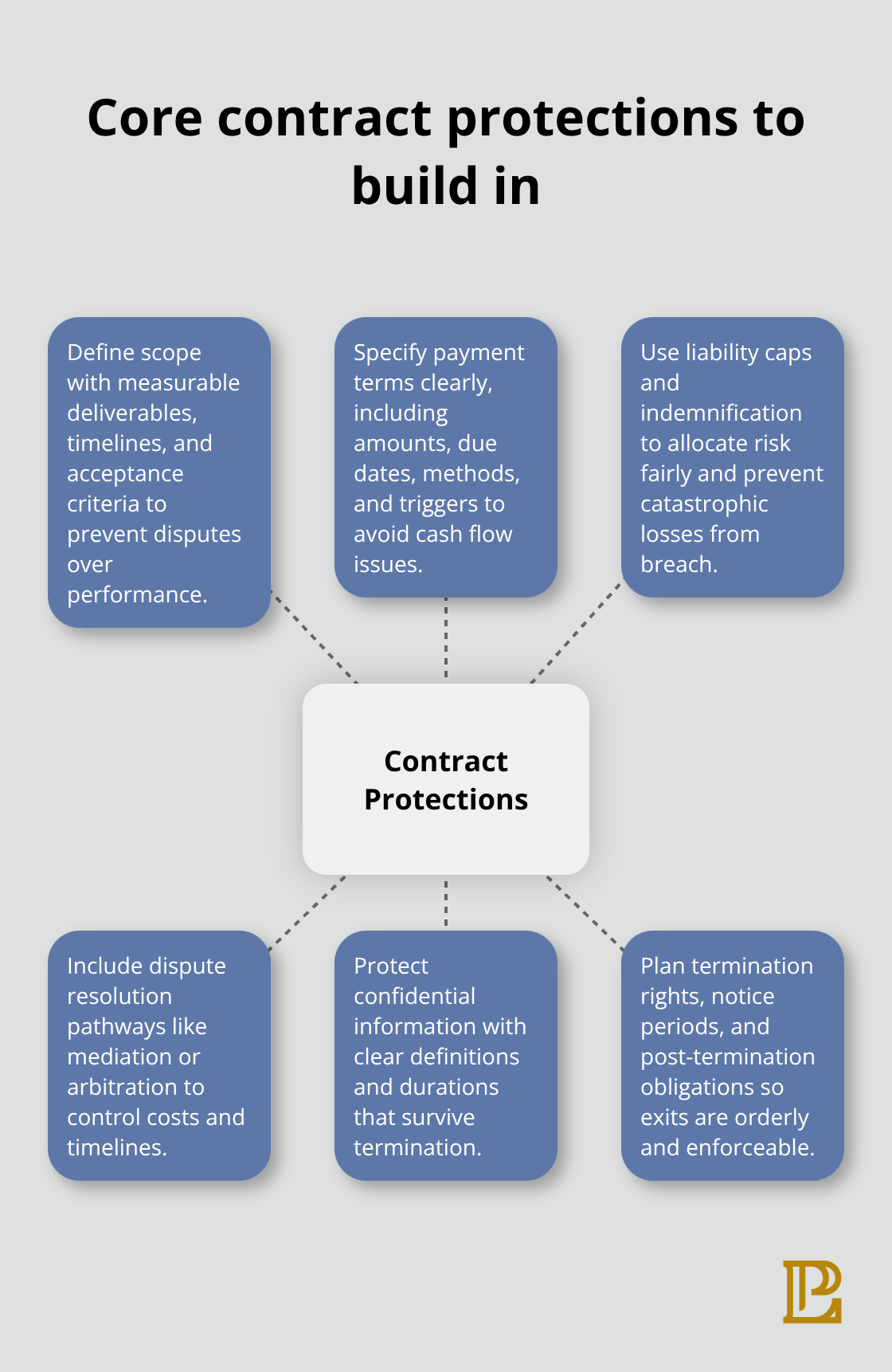
Defining scope with precision separates contracts that work from those that create disputes. When you write a scope of work section, specify exactly what deliverables the other party must provide, the timeline for each deliverable, and measurable standards for acceptance. A software development contract should state the number of features, the testing requirements, the deployment environment, and the acceptance criteria before payment is due. A real estate lease needs square footage, permitted uses, maintenance responsibilities, and insurance requirements spelled out in detail.
Vague references to industry standards or best practices fail in court because judges cannot read minds. California courts consistently reject contracts where essential terms remain undefined, leaving parties to dispute what they actually agreed to. The cost of clarifying scope upfront is minimal compared to the legal fees and business disruption that follow from ambiguous language.
Specify Payment Terms Without Ambiguity
Payment terms deserve the same specificity as scope. State the exact amount due, the date payment must be received, the payment method, and what triggers the payment obligation. If you bill monthly, specify whether payment is due on invoice date or within fifteen days of invoice. If you require deposits, state the deposit amount, when it applies to final payment, and what happens if the project terminates early.
Currency matters too-specify US dollars if you operate across state lines or internationally. Late payment penalties should reflect actual damages from delayed cash flow, not arbitrary punishments that courts might refuse to enforce. Many Hermosa Beach businesses lose leverage by accepting vague payment terms, then waiting months to chase down overdue invoices. Written clarity prevents these cash flow problems from starting.
Allocate Risk Through Liability and Indemnification
Liability and indemnification clauses allocate risk between parties, preventing one party from bearing costs that should belong to the other. If a contractor causes property damage at your location, an indemnification clause requires the contractor to cover those costs rather than forcing your insurance to pay. Liability caps limit exposure to a reasonable amount-often the contract value or a specific dollar amount-so neither party faces catastrophic losses from breach.
California law permits liability caps in commercial contracts between sophisticated parties, though courts scrutinize caps that eliminate all remedies for gross negligence or willful misconduct. Include insurance requirements that match the risk profile of the work, specifying minimum coverage amounts and requiring the other party to name you as additional insured.
Protect Confidential Information and Plan for Termination
Define what constitutes confidential information if trade secrets are involved, and establish how long confidentiality obligations last after the contract ends. Termination provisions should specify whether either party can exit for convenience, whether termination requires notice periods, and what happens to ongoing obligations after termination. A real estate lease requires different termination language than a vendor services agreement, but both need clarity about how the relationship ends and what parties owe each other at that point.
When you build these protections into the contract from the start, you eliminate the uncertainty that leads to disputes. The next section examines how to negotiate and execute these contracts effectively, ensuring that both parties understand and commit to the protections you’ve established.
Getting Your Contract Right Before You Sign
Investigate the Other Party Thoroughly
Thorough due diligence on the other party happens before you negotiate a single term. Pull their business registration records from the California Secretary of State, verify their legal entity status, and check whether they’ve faced disciplinary actions or lawsuits that signal financial instability or operational problems. For real estate transactions, the Department of Real Estate maintains a Verify a License page where you can confirm that agents and brokers hold current credentials and have no disciplinary history.
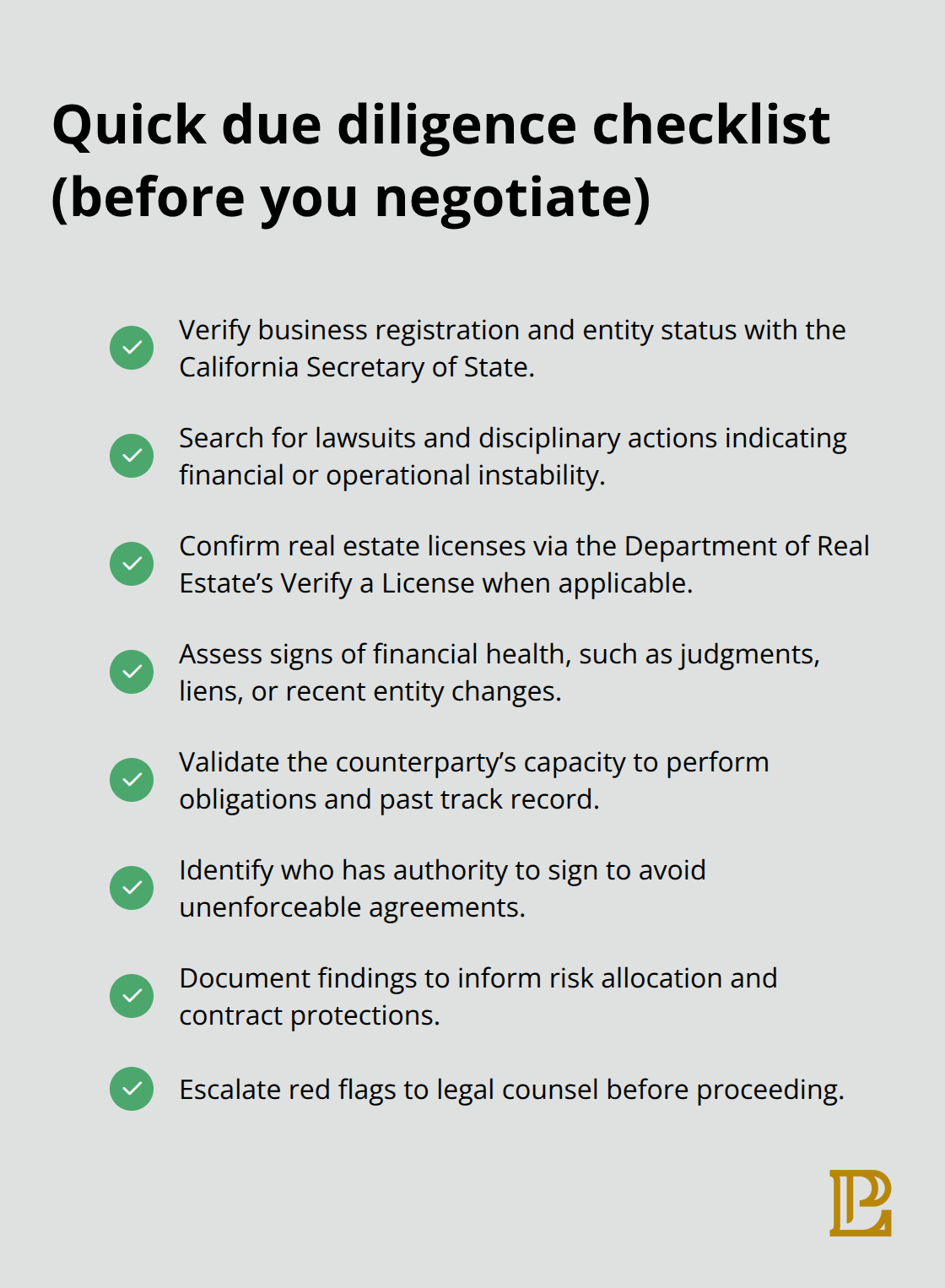
A contractor with a suspended license or a vendor facing multiple lawsuits represents hidden risk that no well-drafted contract can eliminate. Spend two hours investigating the counterparty rather than spending twenty hours in litigation later. This upfront work reveals whether the other party can actually perform their obligations and whether they have a history of honoring agreements.
Document Every Contract Change in Writing
Once you understand who you’re dealing with, you must document every change to the contract in writing. Email exchanges confirming revised terms, signed amendment documents, or side letters all create a paper trail that prevents disputes about what you actually agreed to. California courts look to the written agreement as the final expression of what parties intended, and if you accept modifications verbally but never document them, you lose leverage if the other party denies those changes existed.
One Hermosa Beach real estate developer lost $45,000 in rent concessions because she verbally agreed to lease modifications that the landlord later refused to acknowledge. The original lease said nothing about the new terms, and without written documentation, she had no enforceable claim. Every conversation that changes contract terms must result in a signed writing-this protects both parties and prevents costly misunderstandings later.
Bring in Legal Counsel Before Finalizing
Bringing in legal counsel before you finalize the agreement separates smart business owners from those who learn expensive lessons. Contracts that business owners thought were fine often reveal missing indemnification language, inadequate liability caps, or termination provisions that trap parties in failing relationships after legal review. A real estate investor reviewing a commercial lease without counsel might miss that the lessor can raise rent 50% at renewal, or that maintenance responsibilities are split in ways that create ongoing disputes.
Contract review costs hundreds of dollars; litigation over a poorly drafted contract costs tens of thousands. Have counsel review any agreement where you face material financial exposure, ongoing performance obligations, or significant legal complexity. Counsel also identifies whether California law requirements apply to your specific situation, ensuring your contract satisfies the Statute of Frauds or other mandatory provisions.
Act Early to Prevent Expensive Problems
If you’re in Hermosa Beach or anywhere in Los Angeles County and need contract review before signing, reaching out early prevents problems that become far more expensive to fix after you’ve already committed to the agreement. Legal counsel can spot issues that business owners miss entirely, from hidden renewal obligations to one-sided dispute resolution clauses that favor the other party. The cost of prevention is always lower than the cost of correction after a dispute emerges.
Final Thoughts
Corporate contract law protects your business when you get the fundamentals right from the start. The contracts you sign today determine whether your company operates smoothly or gets trapped in disputes that drain resources and damage relationships. Precision in scope, payment terms, liability allocation, and termination provisions transforms contracts from risky documents into tools that actually work for your business.
Professional legal guidance separates business owners who avoid costly disputes from those who learn expensive lessons through litigation. A contract review before you sign costs far less than fixing problems after you’ve already committed to an agreement. Counsel identifies hidden risks that business owners miss entirely, from one-sided renewal clauses to inadequate indemnification language.
If you’re negotiating a significant contract, reviewing an agreement the other party sent, or forming a business entity that requires proper governance structures, reach out to Pierview Law for a consultation. We handle entity formation, contract drafting, and the full range of business law services that protect your interests in Hermosa Beach and throughout Los Angeles County.